
Hold the Salt! AND keep your furry friends safe
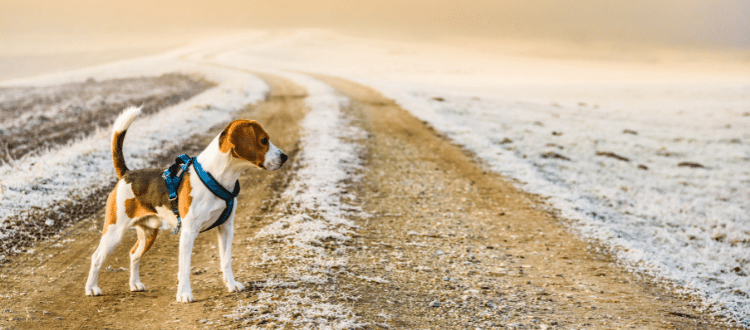
The new year has brought a LOT of snow and it tends to stick around. When it starts to melt and temperatures hover around, or drop below, 32° (freezing), the water refreezes, leaving ice on your patios and sidewalks which can be dangerous for you and your family!
It’s tempting to fix this with rock salt because it’s what we know. It is used on the main roads and is reliable for preventing ice. But you shouldn’t put it on your patios and sidewalks! This is true for natural stone paths and pavers, and even concrete.
Why Not?
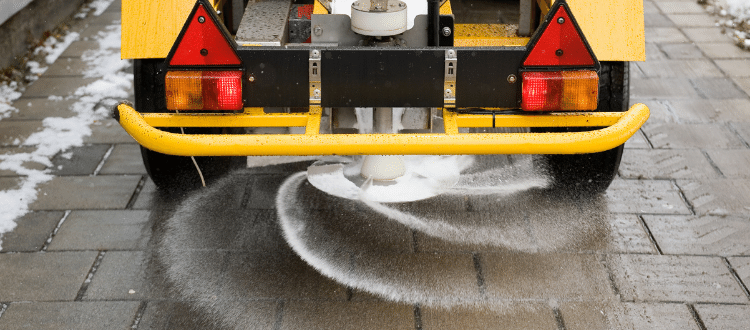
Rock salt is great for asphalt, and it’s cheap, but it can damage your outdoor surfaces, your lawn, any plants or flowers you have, and your indoor floors. It can even be harmful to your pets!
Outdoor Surfaces: Rock salt is highly corrosive to concrete and brick, including stones and pavers. After it does it job melting all of the snow and ice, it leaves trace elements behind. The salt that remains can discolor and scratch the surfaces and it can also get into the pores of the stones, creating holes and cracks that widen with thawing and refreezing, which causes flaking. The risk is even greater if your path is less than 6 months old. Even if you have natural stone paths, the joints can be damaged when exposed to the salty water left behind when rock salt is used, making the stones loose and allowing them to move.
Lawn and Plants: While some of the salt remains on the hard surfaces it’s applied to, most of the salty water mix runs off into the soil, to be absorbed by the surrounding plant life. This causes dehydration as the rock salt steals water from the plants and lawn, and also causes them the be more susceptible to freezing. You may not even notice what damage has been done, but in the Spring, when the plants begin to bloom and your lawn tries to come back green as ever, you may notice that you aren’t seeing the leaves and buds you’re used to and that your grass is brown or patchy.
Indoor Flooring: Rock salt often sticks to your shoes when you use it on the patios and walkways outside your house. It then gets tracked inside your home and can discolor floors and damage carpet, wood, and stone flooring.
Pets: This chemical can also irritate our furry friends! It can get stuck in their paws and cause soreness and if there are any cuts or cracks (which is common due to the cold weather and ice) it can be painful, like rubbing salt in an open wound. Additionally, any ingestion can be very dangerous. This can happen easily if your pet drinks from puddles with the runoff or cleans their paws of the chemical by licking them. Rock salt can be fatal to pets if ingested in certain amounts.
So what should you do instead?
There are a lot of alternatives to rock salt that can keep your walkways clear of snow and ice.
Potassium Chloride: This is one of the safest de-icers. It’s better for pets (though still lethal if ingested by pets with kidney disease) and is less damaging to plant life. Additionally, the freezing point is still low (at 15°-20°) which is comparable to rock salt.
Magnesium Chloride: Similar to Potassium Chloride, this is a safer alternative to rock salt. The freezing point is -13°F making this great for colder temperatures and the salt releases 40% less chloride into the environment. Please note: this is also still lethal to pets with kidney disease if ingested.
Calcium Magnesium Acetate (CMA): CMA is a more natural alternative. It’s a natural acid that is soluble in water. Because it’s biodegradable, it won’t harm the environment (in appropriate doses) and has a typical freezing point of 1°F. It is, however, more expensive than rock salt.
More Helpful Hints:
In addition to, or in lieu of, using de-icing agents, there are steps that you can take to help rid your walkways and outdoor areas of snow and ice.
If you do use a de-icer, put it on before the storm. This usually helps you use less product. For any concrete steps or sidewalks, make sure they are at least 6 months old before using de-icers.
After the snowstorm or ice storm, make sure to shovel the area before trying to apply any product. Pro-tip: use a plastic shovel to avoid damaging any surfaces.
While it won’t clear any ice or melt any snow, you can put down sand to help with traction on your walkways. You can also mix the sand in with a de-icing product, using fewer chemicals, but still decreasing the risk of a fall.


Have Questions?
If you have questions, or would like help with clearing your driveway/pathways, we’re here to help!
 Acres Landscaping